In my previous post, I shared a preprint proposing a structured checklist to facilitate code review in mental health research. Our motivation to write this paper was straightforward: code review can improve the reliability of research results and fosters a culture of transparency and continuous learning. Yet, in practice it is often difficult to implement consistently. Getting started, if you’ve never done it before, can be hard. That is why we shared our experience and checklists.
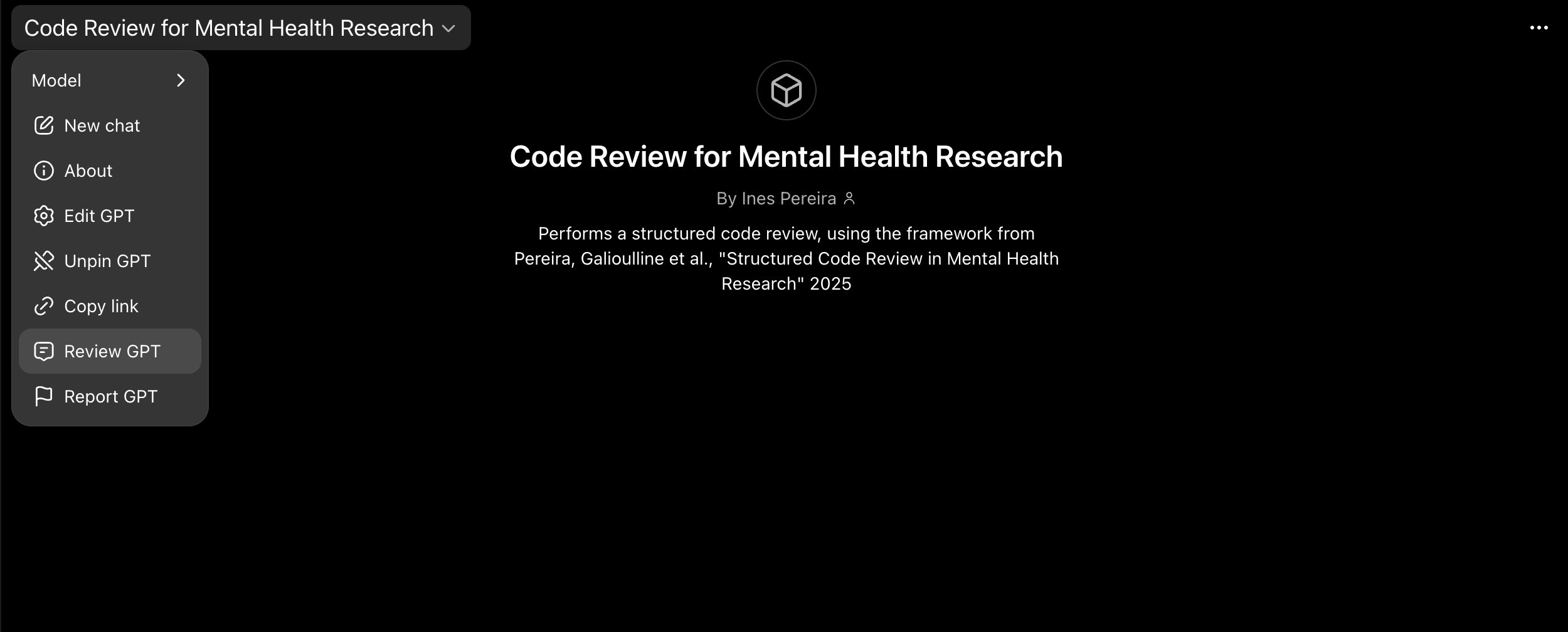
To reduce that friction even further, I’ve now created a custom GPT based on the published checklist.
This is an experiment. One advantage of implementing the checklist as a GPT is that researchers can interact with it directly, test it on their own projects, and identify places where it could be improved.
If you work in mental health research and use this tool (or the original checklist), I would love to hear how well it performs, where it falls short, and what would additionally be useful.
🧪🧪 You can start experimenting here . 🧪🧪
Simply type:
Review this codebase: url/to/your/awesome/project
Alternatively, if the project is not online, you can upload your script.
Have fun!
PS: If you like it, kindly leave a review and some stars ✨